Saturday, June 9, 2012

Organized Intelligence by Walter Lippman


The press has come to be regarded as an organ of direct democracy, charged on a wide scale, and from day to day, with a function often attributed to the initiative, referendum, and recall. The Court of Public Opinion, open day and night, is to lay down the law for everything all the time. It is not workable. And when you consider the nature of the news, it is not even thinkable; as social truth is organized today the press is in no way constituted to furnish from one edition to the next the amount of knowledge which the democratic theory of public opinion demands. The news is primarily constructed of stereotypes according to the press’s own peculiar code and the urgency of its own self-interest; ‘a dome of multi-colored glass which stains the white radiance of eternity’ (Shelly). At its best the press is a servant and guardian of institutions; at its worse it is a means by which a few exploit social disorganization to their own ends. In the degree which institutions fail to function, the unscrupulous journalist can fish in troubled waters, and the conscientious reader must ever gamble with the uncertainties which the news presents.


The press is no substitute for institutions. It is like the beam of a searchlight that moves restlessly about, bringing one episode and then another out of the darkness into vision. Men cannot do the work of the world by this light alone. They cannot govern society by episodes, incidents, and eruptions. It is only when they work by a steady light of their own, that the press, when it is turned upon them, reveals a situation intelligible enough for a popular decision. The trouble lies deeper than the press, and so does the remedy. It lies in social organization based on a system of analysis and record, and in all the corollaries of that principle; in the abandonment of the theory of the omni-competent citizen and decentralization of decision, in the coordination of decision by comparable record and analysis. If at the center of management there is a running audit, which makes work intelligible to those who do it, and those who superintendent it, issues when they arise are not the mere collisions of the blind. Then, too, the news is uncovered for the press by a system of intelligence that is also a check on the press.


That is the radical way. For the troubles of the press, like the troubles of representative government, be it territorial or functional, like the troubles of industry, be it capitalist, cooperative, or communist, go back to a common source: the failure of self-governing people to transcend their casual experience and their prejudice, by inventing, creating, and organizing a machinery of knowledge. It is because they are compelled to act without a reliable picture of the world, that governments, schools, newspapers and churches make such small headway against the more obvious failings of democracy, against violent prejudice, apathy, preference for the curious trivial as against the dull important, and the hunger for sideshows and three legged calves. This is the primary defect of popular government, a defect inherent in its traditions, and all its other defects can, I believe, be traced to this one.


Today the machinery of social and political science are so little perfected ( and when they are developed unavailable to average citizens) that in many serious decisions and most of the casual ones, there is yet no choice but to gamble with fate as intuition prompts. But we can make a belief in reason one of those intuitions. We can use our wit and our force to make footholds for reason. Behind our pictures of the world, we can try to see the vista of a longer duration of events, and wherever possible to escape from the urgent present, allow this longer time to control our decisions. And yet, even when there is this will to let the future count, we find again and again that we do not know for certain how to act according to the dictates of reason. The number of human problems on which reason is prepared to dictate is actually very small.


There is, however, a noble counterfeit in that charity which comes from self-knowledge and an unarguable belief that no one of our gregarious species is alone in his longing for a friendlier world. So many of the grimaces men make at each other go with a flutter of their pulse, that they are not all of them important. And where so much is uncertain, where so many actions have to be carried out on guesses, the demand upon the reserves of mere decency is enormous, and it is necessary to live as if good will would work. We cannot prove in every instance that it will, nor why hatred, intolerance, suspicion, bigotry, secrecy, fear, and lying are the seven deadly sins against public opinion. We can only insist that they have no place in the appeal to reason , that in the long run they are a poison; and in taking our stand on the view of the world which outlasts our own predicament, and own lives, we can cherish a hearty prejudice against them.


We can do this all the better if we do not allow frightfulness and fanaticism to impress us so deeply that we throw up our hands peevishly, and lose interest in the longer run of time because we have lost faith in the future of man. There is no ground for this despair, because all the ifs on which, as William James said, our destiny hangs, are as pregnant as they ever were. What we have seen of brutality, we have seen, and because it was strange, it was not conclusive. It was only Berlin, Moscow, Versailles in 1914 to 1918, not Armageddon, as we rhetorically said. The more realistically men have faced out the brutality and hysteria, the more they have earned the right to say that it is not foolish for men to believe, because another great war took place, that intelligence, courage and effort cannot ever contrive a good life for all men.


Great as was the horror, it was not universal. There were corrupt, and there were incorruptible. There was muddle and there were miracles. There was huge lying. There were men with the will to uncover it. It is no judgment, but only a mood, when men deny that what some men have been, more men, and ultimately enough men, might be. You can despair of what has never been. You can despair of ever having three heads, though Mr. Shaw has declined to despair of even that. But you cannot despair of the possibilities that could exist by virtue of any human quality which a human being has exhibited. And if amidst all the evils of this decade, you have not seen men and women, known moments that you would like to multiply, the Lord himself cannot help you.


Sunday, June 3, 2012

Taking A Chance by Walter Lippmann


The other night I sat up late reading one of those books on politics which are regarded as essential to any sort of intellectual respectability. It was a book that might be referred to in the Constitutional Convention at Albany. As I read along I was possessed with two convictions about the author. The first was that he had worn a high hat when he wrote the book; the second, that he had no teeth, which made him a little difficult to understand. And all through that hot mosquito-ridden night the disintegration of his vocabulary went churning through my head. . . “social consciousness. . .sovereign will. . .electoral duties. . .national obligations. . . on moral, economic, political, and social grounds. . . social consciousness. . . sovereignty. . . electoral. . . social. Sovereign. . . national. . . sovereign. . . “ Each word was as smooth and hard and round as a billiard ball, and in the malice of my sleeplessness I saw the toothless but perfectly groomed man in a high hat making patterns of the balls which were handed to him by his butler.


As the night dragged along, the callowest prejudices came to the surface and all fairer and reputable judgment deserted me. I heard myself say that this ass who plagued me couldn’t possibly have any ideas because he didn’t have any vocabulary. How is it possible, I asked, to write or think about the modern world with a set of words which were inchoate lumps when Edmund Burke used them? Political writing is asphyxiated by the staleness of its language. We are living in a strange world, and we have to talk about it in a kind of algebra. And of course if we only deal with colorless and vacant symbols, the world we see and the world we describe soon becomes a colorless and vacant place.


Nobody can write criticism of American politics if the only instruments at his disposal are a few polysyllables of Greek and Latin origin. You can’t put Bryan and Hearst and Billy Sunday into the vocabulary of Aristotle, Bentham, or Burke. Yet if you are going to write about American politics, can you leave out Bryan and Hearst and Billy Sunday, or even Champ Clark? The author I had been reading did leave them out completely. He talked about the national will of America as if it were a single stream of pure water which ran its course through silver pipes laid down by the Constitutional Fathers.


I tried to recall any new words which had been added to the vocabulary of social science. Boss, healer, machine, log-rolling, pork-barrel – those words which meant something at Washington or in Tammany Hall, but my author would no more have used them than he would have eaten green peas with a knife. Anyone who did use them he would have regarded as a mere journalist, and probably a cocksure young man at that. Then I remembered that the diplomats had made current a few fresh words within the last generations – hinterland, pacific penetration, sphere of influence, sphere of legitimate aspiration; they had meaning, because nations went to war about them. But the real contributions, curiously enough, have come not from the political theorist, but from novelists, and from philosophers who might have been novelists.


H.G. Wells and William James, I said to myself, come nearer to having a vocabulary fit for political uses than any other writers in English. They write in terms which convey some of the curiosity and formlessness of modern life. Speech with them is pragmatic, and accurate in the true sense. They are exact when exactness is possible, and blurred when the thought itself is blurred. They have almost completely abandoned the apparatus of polysyllables through which no direct impression can ever penetrate. They do not arrange concepts, they gather precepts, and never do you lose the sense that the author is just a man trying to find out what he thinks. But the political writer who gave me the nightmare never admitted that he was just a man. He aimed at that impersonal truth which is like the inscription on monuments.


He regarded himself as a careful person. His method was to retrieve in qualifying clause whatever he had risked in assertion. So he achieved a compendium of things-that-can’t-be-done, a kind of anthology of the impossible. His notion of getting at the truth was to peal it, like Peter Gynt’s onion, though Peter Gynt had the sense to be surprised that there was nothing to an onion but the layers.


My temper grew worse as I reflected on the hypnotic effect of books done in this manner, on the number of men whose original vision is muffled by verbal red tape and officialism of the spirit. The true speech of man is idiomatic, if not of the earth and sky, then at least of the saloon and the bleachers. But no smelly or vivid expression can win its way through these opaque incantations with which political science is afflicted. They forbid fresh seeing. An innocence of the eye is impossible, for there are no words to report a vision with; and visions which cannot be expressed are not cultivated. No wonder, I thought, political philosophizing means so little in human life. Its woodenness is the counterpart of a wooden politics, its inhumanity is the inhumanity of a state machine. The language is callous, unmoved and unmoving, because it aims to reflect rather than to lead the life upon which it comments. Dead speech is good enough for thoughts that bring no news, and it is to the timidity of the political thought that we must ascribe its preference for a dead language.


In these tomes over which we yawn at night there are occasionally ideas that might shake the world. But they do not shake it, for they are written for people who do not like to shake it. They are hedged with reservations, fortified with polysyllables, and covered over with appalling conceit that here is truth – objective, impersonal, cold.


I generalize rashly: that is what kills political writing, this absurd pretense that you are delivering a great utterance. You never do. You are just a puzzled man making notes about what you think. You are not building the Pantheon, then why act like a graven image? You are drawing sketches in the sand which the sea will wash away. What more is your book but your infinitesimal scratching, and who the devil are you to be grandiloquent and impersonal? The truth is you’re afraid to be wrong. And so you put on these airs and use these established phrases, knowing that thy will sound familiar and will be respected. But this fear of being wrong is a disease. You cover and qualify and elucidate, you speak vaguely, you mumble because you are afraid of the sound of your on voice. And then you apologize for your timidity by frowning learnedly on anyone who honestly regards thought as an adventure, who strikes ahead and takes his chances. You are like a man trying to be happy, like a man trying too hard to make a good mashie shot in golf. It can’t be done by trying so hard to do it. Whatever truth you contribute to the world will be one lucky shot in a thousand misses. You cannot be right by holding your breath and taking precautions.


The New Republic
August 7, 1915


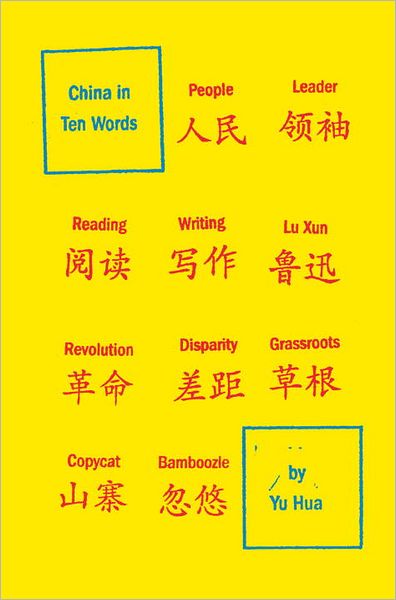
Bamboozle by Yu Hua


What is huyou ? Originally it meant “to sway unsteadily” – like fishing boats bobbing in the waves, for example, or leaves shaking in the wind. Later it developed a new life as an idiom particularly popular in northeast China, derived from another phrase that sounds almost the same – “to mislead.” Just as variant strains of the flu virus keep constantly appearing, huyou has in its lexical career diversified itself into a dazzling range of meanings. Hyping things up and laying it on thick – that’s huyou. Playing a con trick and ripping somebody off – that’s huyou, too. In the first sense, the word has connotations of bragging, as well as enticement and entrapment; in the second sense, it carries shades of dishonesty, misrepresentation and fraud. “Bamboozle, perhaps, is the closest English equivalent.


In China today, “bamboozle” is a new star in the lexical firmament, fully the equal of “copycat” in its charlatan status. Both count as linguistic nouveau riche, but their rises to glory took somewhat different courses. The copycat phenomena emerged in a collectivist fashion, like bamboo, like bamboo shoots springing up after a spring rain, whereas “bamboozle” had its source in an individual act of heroism – the hero in question being China’s most influential comedian, a north-easterner named Zhao Benshan. In a legendary skit performed a few years ago, Zhao Benshan gave ‘bamboozling” its grand launch, announcing to the world:


I can bamboozle the tough into acting tame,
Bamboozle the gent into dumping the dame,
Bamboozle the innocent into taking the blame
Bamboozle the winner into conceding the game.
I’m selling crutches today, so this is my aim:
I’ll bamboozle a man into thinking he’s lame.


In “Selling Crutches” he proceeds with infinite guile, trapping the fall guy into one psychological snare after another, exquisitely employing deception and hoax to lead him down the garden path until in the end a man whose legs are perfectly normal is convinced he’s a cripple and purchases – at great expense – a shoddy pair of crutches.


When this very funny routine was performed in CCTV’s Spring Festival gala – the most-watched television program in China – the word “bamboozle” immediately took the nation by storm. Like a rock stirring up a tidal wave it triggered a tsunami-style reaction as phenomena long existent in Chinese society – boasting and exaggerating, puffery and bluster, mendacity and casuistry, flippancy and mischief – acquired grater energy and rose to new heights in bamboozle’s capacious ocean. At the same time a social propensity towards chicanery, pranks, and other shenanigans drew further inspiration from it. Once these words with negative connotations took shelter under bamboozlement’s wing, they suddenly acquired a neutral status.


Zhao Benshan put “bamboozle” on the lips of people all over the country, male and female, young and old. The word slipped off their tongues as smoothly as saliva and shot from their mouths as freely as spittle. Politics, history, economics, society, culture, memory, emotion, and desire – all these and more find a spacious home in the land of bamboozlement. It has become a lexical master key: in the palace of words it opens all kinds of doors.


Bamboozlement, of course, does not always have negative connotations. When one is in a nostalgic mood, “bamboozle” can serve to purge the word “trick” of its pejorative meaning . . . Just as “copycat” gives imitation and piracy a new range of connotations, “bamboozle” throws a cloak of respectability over deception and manufactured rumor. . .


There is really no end to stories of fraud and chicanery, for “bamboozle” has already insinuated itself into every aspect of our lives. If a foreign leader visits China, people will say he’s “come to bamboozle,” and if a Chinese leader travels abroad, people will say he’s “gone to bamboozle those foreigners.” When a businessman heads out to negotiate a deal, he’ll say he’s “off to bamboozle,” and when a professor goes to deliver a lecture, he’ll say the same thing. Social interactions and romantic partnerships fall under this heading too: “I bamboozled him into being my friend,” you might hear someone say, or “I bamboozled her into falling for me.” Even Zhao Benshan, the godfather of bamboozling, has become a casualty. A couple of years ago a text message appeared on many millions of Chinese cell phones:


Got access to a television? Be sure to turn on CCTV – Zhen Benshan has been killed by a bomb, the police sealed off the Northeast, 19 people dead, 11 missing, one bamboozled!


The one bamboozled, of course, was the person reading the message.


A friend and I once traveled together to a speaking engagement. Last ting at night he asked me for a couple of sleeping pills. He wasn’t planning to take them, he said, but simply to place them next to his bed as a form of subliminal tranquilizer. “They’ll bamboozle me into falling asleep,” he said with a laugh.


Bamboozlement can also give a new gloss to literary works. There’s a famous line by the Tang poet Li Bai: “White hair falling thirty thousand feet.” It used to be seen as the quintessence of the Chinese literary imagination, but people’s commentary now takes a different form: “That Li Bai sure knew how to bamboozle,” they scoff.


Bamboozling has practically become an essential fashion accessory. In the last couple of years schoolchildren have developed a new fad: buying so- called bamboozle cards. Which are the same size as drivers’ licenses. You see vendors hawking them on city streets and pedestrian bridges” Bamboozle cards – one yuan each! With bamboozle card in hand or purse, bamboozle the world for all it’s worth!”


“Here is certified,” the card reads, “that Comrade So-and-so possesses distinctive technique and rich experience in bamboozling: few are those who can avoid being duped.” The bamboozle card is embossed with a round, official-looking stamp just like other Chinese identity cards; its issuing authority is the National Bamboozle Commission. Schoolchildren greet each other by pulling out their cards and waving them in each other’s faces, like FBI agents flashing their ID in a Hollywood movie – the ultimate in school-age cool.


The rapid rise in popularity of the word “bamboozle” like that of “copycat”, demonstrates to me a breakdown of social morality and a confusion in the value system in China today; it is an aftereffect of our uneven development these past thirty years. If anything, bamboozling is even more widespread in social terms than the copycat phenomena, and when bamboozling gains such wide acceptance, it goes to show we live in a frivolous society, one that doesn’t set much store by matters of principle.


My concern is that when bamboozling unabashedly becomes a way of life, then everyone from the individual to the population at large can become its victim. For a bamboozler is quite likely to end up bamboozling himself or – in Chinese parlance – to pick up a big stone only to drop it on his own foot. I imagine everyone has probably had this kind of experience: you try to bamboozle someone, only to end up bamboozling yourself. I am certainly no exception, for when I look back on my own career, I find many such examples.


Wednesday, May 23, 2012

Picasso in Occupied Paris by David King


Another place Sartre, Camus, and Beauvoir could be seen that spring was at the restaurant Catalan, on rues des Grands-Augustins, sometimes seated at the table of their new friend, Pablo Picasso. Despite many invitations to come abroad, the Spanish artist had remained in Paris during the Nazis Occupation, painting in his two-story studio on rue Saint-Augustin, on the Left Bank. The sixty-two -year –old, with long white hair falling onto his shoulders, was surrounded by his work And his women, including his latest lover, the twenty-two-year-old painter Francoise Gilot.


In the eyes of the Nazis authorities, Picasso was a highly suspect artist. He had supported the Spanish republicans during the Civil War, raised money for their cause, and published caricatures of the military dictator in his Dream and Lie of Franco. He had commemorated the German firebombing raid of the Basque city of Guernica on the afternoon of April 26, 1937, on a three-hundred-square-foot canvas that had dramatically raised awareness of the tragedy. Hitler, of course, had place the painter on a list of modern degenerates, and the Nazis banned all his exhibits in Paris.


The French police had actually collected a sizable file on the Spanish painter, a dossier that was only discovered in 2003, when 140 cardboard boxes were returned to Paris from Moscow. The Russians had seized the archives in 1945 from the Germans, who had in turn taken during the Liberation. As historians had then learned, Picasso had applied for French citizenship in April 1940, but the state had rejected the application on the grounds that he was suspected of being an anarchist or communist, or harboring sympathies leaning in that direction. “He has no right to be naturalized,” an official wrote on the form, and “should even be considered suspect from a national viewpoint.”


Picasso had not even told his closest friends about this request. He had, however, let then know his fears: namely, that his authorization to remain in the country was about to expire and he had sworn never to return to Spain as long as Franco was in power. Fortunately for Picasso, a sympathetic police officer intervened. “Very Illegally,” Maurice Toesca wrote in his diary in September 1943, “I have prolonged his stay for three years.”


The Germans who visited Picasso’s studio during the Occupation were not the SS men who were rumored to be slashing his paintings, but instead a number of officials who admired his work. One frequent visitor was Lieutenant Gerhard Heller of the Referat Schriftum (Literature Section) of the Propaganda-Staffel. After his introduction in June 1942, Heller, a censor, would take a break from the stacks of manuscripts overflowing on the shelves, tables, chairs, and floors at his office at 52 Champs-Elysees to climb the spiral staircase, heart beating with excitement at another chance to observe the most infamous example of modern degenerate art at work.


As usual, Picasso was experimenting with color, texture, and form. In addition to woodcuts and pen-and-ink drawings, he worked on cardboard, matchboxes, cigarette boxes, even food, like a piece of bread – a reflection of his creative zeal as well as the shortage of canvases under Occupation. Many of the objects of his paintings – sausages, legs of lamb, grand buffet tables, and the empty cooking pot – reflect the preoccupations and hardships of the period, as did the death’s-heads and grotesque monsters reminiscent of his early cubist days. Even his choice of colors, more black, gray, and beige, seemed to parallel the drab palette of the Occupation.


On the evening of March 19, 1944, Picasso’s play Le Desir attrape par la queue (Desire Caught by the Tail) was performed at his friends Michel and Zette Leiris’s fifth-floor apartment on the Quai des Grands-Augustin. It was a dark surrealist farce that featured star-studded cast: Jean-Paul Sartre, Simone de Beauvoir, and Picasso’s former lover Dora Maar. Albert Camus narrated, describing the largely imaginary sets – that is, except for a large black box that served alternatively as a bed, a bathtub, and a coffin.


Picasso had written the play three years earlier, beginning, as he recorded in a notebook, on the evening of January 14, 1941, and, in the tradition of surrealist automatic writing, finished it three days later. Reminiscent of 1920s avante-garde theater, the play revolved around deprivation and indulgence, or more specifically hunger and sex. Michel Leiris, who had selected the cast, played the lead role of Big Foot. Sartre was The Round End; Raymond Queneau, The Onion; and Jacques-Laurent Bost, Silence. Simone de Beauvoir played The Cousin, while publisher Jean Aubier was The Curtains.


When Gertrude Stein had read the script, she suggested that Picasso stick to painting. But the photographer Gyula Haasz, better known as Brassai, thought otherwise. He praised Picasso’s virtuosity, comparing the composition style to the “verbal trance that gave free reign to dreams, obsessions, unavowed desires, comical connections between ideas and words, everyday banalities, the absurd.” This play, he added, displayed the painter’s “humor and inexhaustible spirit of invention. . . in their pure state.”


As the play ended about eleven, just before that night’s curfew, Leiris had invited the cast and several friends to spend the night. They sang, listened to jazz records, and admired Sartre playing the piano. Camus and the host acted out various scenes, enhanced in part with wine served warm with cinnamon. Then party ended at five in the morning. Simone de Beauvoir was overjoyed: “A year before we would have never dreamed of gathering together like this and having a noisy, frivolous party that went on for hours.”


This was the first of the fiestas, as Michel Leiris dubbed them, that would take place in the spring of 1944. Beauvoir described another one not long afterwards, at surrealist Georges Bataille’s house in the Cour de Rohan:


We constituted a sort of carnival with its mountebanks, its confidence men, its clowns, and its parades. Dora Marr used to mime a bullfighting act; Sartre conducted an orchestra from the bottom of a cupboard; Limbour carved up a ham as though he were a cannibal: Queneau and Bataille fought a duel with bottles instead of swords; Camus and Lemarchend played military marches on saucepan lids, while those who knew how to sing, sang. So did those who didn’t. We had pantomimes, comedies, diatribes, parodies, monologues, and confessions: the flow of improvisations never dried up, and they were always greeted with enthusiastic applause. We put on records and danced; some of us . . . very well; others less expertly.


Beauvoir, looking back, remembered being “filled with the joy of living. I regained my old conviction that life can and ought to be a real pleasure.”


Monday, May 21, 2012

Enlightened Aging by Nortin M. Hadler


Aging, dying, and death are no longer solely the purview of philosophers and clerics. Many biological and epidemiological theories of aging have been articulated. Some are even testable theories, and many have been tested. The result is an informative science. We still have much to learn and many a theory that eludes testing, but the product of all this science is a body of information that has much to say to anyone today who wants to reflect on aging, dying and death. This book is anchored on this body of information. Beyond reflection, aging, dying, and death have arrived at center stage in realpolitik at the urging of economists and for public-policy considerations, given the needs of the burgeoning population of elderly.


Aging, dying, and death are not diseases. Yet they are targets for the most egregious marketing, disease mongering, medicalization, and overtreatment. This book is to forewarn and arm the reader with evidence-based insights that promote informed medical and social decision making. All who have to good fortune to be healthy enough to confront the challenges of aging need such insights. Otherwise they are no match for the cacophony of broadcast media pronouncing the scare of the week or the miracle of the month; pandering magazine articles; best-selling books pushing “angles” of self-interest; and the ubiquitous marketing of pharmaceuticals and alternative potions, poultices, and chants. All are hawking ‘successful aging” and “long life” as if both were commodities. We awaken every day to advice as to better ways to eat, think, move, and feel as we strive to live longer and better. We are bombarded with the notions of risks lurking in our bodies and in the environment that need to be reduced at all cost. Life, we are told, is a field that is ever more heavily mined with each passing year.


There are places on the globe where life is a literal minefield. There are others where it is a figurative minefield. The former are places where ripe old age is the fate of a lucky few, unconscionably only a few. Those places usually have common denominators: inadequate water and sewer facilities, unstable political structures, and dire poverty. They are a reproach to the collective conscience. However, I am writing this book for those of us fortunate enough to reside in the resource-rich world, countries that have crossed the epidemiological watershed so that it is safe to drink the water. For us, death before our time is not a fact of life; it’s a tragedy. For us, a ripe old age is not a will-o’-wisp; it’s likely. And this happy and fortunate circumstance has almost nothing to do with what we eat, with our potions and pills, or with our metaphysical beliefs, and it has very little to do wit the ministrations of the vaunted “health-care” systems that we underwrite. In the chapters that follow, this becomes disconcertingly, even painfully, clear.


Dr. Hadler is professor of medicine and microbiology/immunology at the University of North Carolina and attending rheumatologist at UNC Hospitals. He also wrote


Stabbed in the Back: Confronting Back Pain in an Overtreated Society

Worried Sick: A Prescription for Health in an Overtreated America


Saturday, May 19, 2012

Europe's First War with China by Tonio Andrade


The Sino-Dutch War, 1661-1668, was Europe’s first war with China and the most significant armed conflict between European and Chinese force before the Opium War two hundred years later. The Opium War, of course, was fought with powerful steamships, and China lost badly. The Sino-Dutch War was fought with the most advanced cannons, muskets, and ships and the Chinese won. The great Ming warlord Koxinga drove the Dutch out of Taiwan.


The Sino-Dutch War is frequently mentioned in historical literature and in textbooks, but there has never been a major study of it in any language that makes use of the many sources – Chinese and European – that are available. Historians will doubtless uncover new documents and find errors and omissions here, but I hope this book will lead to greater understanding of this fascinating episode of global history.


I certainly found it fascinating to write. One thing that absorbed me as I read the sources is how the weather – the planet – became a major character. Time and time again, the war turned on a storm. Even before the war started, a typhoon destroyed a Dutch fortress on Taiwan and altered the sandy island on which it had been perched so much that the Dutch couldn’t rebuild it. This left the Dutch governor Coyet particularly vulnerable to Koxinga’s invasion. Another storm drove away the relief fleet that Coyet had managed to summon against the prevailing winds,, dashing one of its vessels to the ground, and, more importantly, taking from Coyet the element of surprise. Tide surges, unexpected currents, freak winds – over and over again nature changed the course of the war. I came to believe that nature was more important than any other factor in the war.


I say “nature,” because to me all this is an expression of the stochasticy of a beautiful but indifferent universe. As a botanist friend of mine says, “What do the stars care about some slime mold at the edge of one galaxy?” But of course the Dutch and the Chinese saw it differently. Both felt there was a higher power intervening in earthly affairs. The Dutch called in God, the Chinese called it Heaven, and although their cosmologies and theologies differed, they saw in the storms and tides, famines and floods a divine purpose. That each side thought Heaven favored their own people – or should favor their own people – is just they way they were built, it seems.


The fact that I kept finding myself writing about nature comes mostly from the sources – or I believe so anyway – but it resonated wiht me because I am trying to make sense of my own time, when climate catastrophe looms, when nature is about to start bucking like never before in our history. It bucked pretty hard in the seventeenth century, too. Right around the time the action in this book takes place, the global climate cooled abruptly. The cooling might not have caused major problems by itself, but it was accompanied by severe climate instability, just as global warming will be. There were floods and droughts, locusts and famines, riots and rebellions. Bandits raged, and governments fell like never before and never since. In fact, if it hadn’t been for this seventeenth-century global climate crisis, the Sino-Dutch War might never have happened. Koxinga might have ended up a Confucian scholar, passing examinations and writing poetry. The Dutch might have kept Taiwan for generations longer.


So did Koxinga win because he just happened to be better favored by the weather? No. Although luck played a role, Koxinga won because of leadership. His troops were better trained, better disciplined, and most important, better led than the Dutch. Bolstered by a rich military tradition, a Chinese ‘way of war,’ Koxinga and his generals outfought Dutch commanders at every turn.


The Sino-Dutch War can thus teach us valuable lessons about military history. It was fought at a time when the technological balance between China and the West was fairly even, a time more similar to today than the periods of the other Sino-Western wars – the Opium War, the Boxer Rebellion, the Korean War – all of which were fought across a steep technological gradient. Military historians have posited the existence of a “western way of war,” a “peculiar practice of Western warfare . . . that has made Europeans the most deadly soldiers in the history of civilization.” But partisans of this sort of argument are generally ignorant of Chinese military tradition. In the Sino-Dutch War, Chinese strategies, tactics, and leadership were superior, and all were tied to a set of operational precepts drawn from China’s deep history, a history that is as full of wars as Europe’s own. The Chinese sources I read are woven through with strands of wisdom from classics like The Art of War and The Romance of Three Kingdoms. Indeed, Chinese historians have argued that Koxinga’s victory over the Dutch was due to his mastery of this traditional military wisdom.


[ The Dutch had the advantage of large ships which could sail close to the wind and carry large cannons but Chinese junks could always outrun them sailing with the wind and could be used to much greater advantage in shallow waters. The Dutch had Renaissance fortresses, with bastions that could establish deadly cross-fires against besieging forces. After some initial frustrations, however, Koxinga adapted and learned the arduous siege-works necessary to counter their power and force surrender.]


Thursday, May 17, 2012

The Scandalous World of Olive Oil by Tom Mueller


Everyone in the olive oil business in California, and in America, knows a fraud story, because everyone knows a fraudster. The United States, whose oil consumption is third in the world and is growing at 10 percent annually, a market worthy over $1.5 billion and climbing, has long had the loosest laws on earth concerning olive oil purity, and the new USDA standards passed in October 2010, which mirror the lax regulations of the International Olive Council (UN), remain voluntary, with no provision for enforcement. Thus, the United States of America is an olive criminal’s dream.


A recent survey of supermarket extra virgins performed by the UC Davis Olive Center, in cooperation with the Australian Oils Research Laboratory, revealed that 69 percent of oils tested had taste flaws such as rancid, fusty, and musty, which meant they weren’t extra virgins at all and had been mislabeled. Such cases of “legal fraud” are common in American supermarket oils, as they are in many parts of the world: similar findings were reached by Andreas Marz in Germany, by CHOICE magazine in Australia, by the regional government in Andalucia. Paul Vossen, a University of California oil specialist, who beginning in 1997 trained and led America’s first IOC recognized tasting panel, said “We’ve pulled olive oils off the shelf and I would say very seldom do we ever find on that passes as extra virgin.” The same is often true at gourmet retailers and websites.


[ “A low incidence of cardiovascular disease, dementia, and certain kinds of cancer are among the central benefits attributed to the Mediterranean diet. Since the 1950s, people have accepted that olive oil, the main source of fat in this diet, is the keystone of this health dietary regime. Some of olive oil’s positive effects stem from its monounsaturated fat profile – at least its not butter or pork fat – but, more and more, medical research suggests that the polyphenols and other micro-nutrients , which constitute a scant 2 percent of its volume but are only present even to that degree in fresh, genuinely ‘extra virgin’ , are the source of olive oil’s health benefits. The concentration of beneficial micro-nutrients varies widely among oils, depending on which of the 700 kinds of olives are used, where they are grown, how much water the trees receive, the ripeness of the fruit at harvest, and the milling and extraction methods used. “Extra Virgin” refers to the coming together of all these variables in a rich soup of micronutrients that are completely absent in refined oils. The price for a genuine bottle of extra virgin is approximately $18 per 500ml. ]

But, “Price is by no means and indicator of quality,” Vossen said. “The high-ticket items can be equally bad.”


In the wholesale market, a lot of oil is adulterated outright with cheap vegetable oils. It is rare to find authentic extra virgin in a restaurant in America, even in fine restaurants that ought to know better. It is nearly impossible in some localities, such as southern California, where large-scale counterfeiters pump out blends of low-grade olive oil and soybean oil dyed bright green and sell it to their fences, the big-name ‘legitimate wholesalers’ such as Unilever, Caparelli and Sysco.


Much of the fake olive oil sold in America is imported. In 2006, in a rare intervention by authorities, federal marshals seized about 61,000 liters of what was supposedly extra virgin olive oil and 26,000 liters of olive pumice oil from a New Jersey warehouse. The shipment was all soybean oil. In 1997 federal marshals had seized a similar shipment from the same company which turned out to be mostly sunflower seed oil. The companies founder had pleaded guilty in 1988 to conspiring to import feta cheese contaminated with benzene hexachloride.


Estimates are that at least 50% of the olive oil sold in America is fraudulent, with particularly acute problems in the food service industry. “In America, people can pretty much put whatever they want in the container,” says Leonardo Colavita(the son of the man upon whom Marlin Brando's character in "The Godfather" was based). “So long as the product isn’t toxic, you can sell it however you like. If you put seed oil inside extra virgin, you don’t poison anyone so it’s the consumer’s choice whether to buy it or not. If you bought yourself some extra virgin that turns out to be lampante - [‘lamp oil’ the lowest grade which has to be chemically refined before it can be sold as food] - that’s your tough shit.”

The FDA considers olive oil adulteration a low priority. Martin Stutsman says his agency is hesitant to commit its extremely limited resources to fighting olive oil adulteration because he thinks it doesn’t represent a serious public health hazard. True, olive oil mixed with cheaper vegetable oils doesn’t compare in danger or virulence to anthrax, botulism or salmonella. Customers just miss out on health benefits they thought they were getting and paying for yet Italian investigators have found hydrocarbon residues, pesticides and other contaminants in fake olive oils, and pomace oil, a common adulterant, sometimes contains mineral oil as well as PAHs, proven carcinogens that damage DNA and the immune system. Then there’s the 1981 case of toxic oil syndrome in Spain, when rapeseed oil adulterated with an industrial additive, sold as olive oil, killed eight hundred people and seriously injured thousands more. Olive oil imported in flexi-bag containers in 2008 was found to be contaminated with naphthalene, a pesticide commonly used to fumigate cargo ships.


In fact, the FDA is itself the victim of a generalized bias against government regulation and an unfounded faith in laissez-faire economics. A November 2007 report on an internal review by the FDA’s own Subcommittee on Science and Technology stated that


The FDA cannot sufficiently monitor either the tremendous volume of products manufactured domestically or the exponential growth of imported products. During the past 35 years, the decrease in FDA funding for the inspection of our food supply has forced FDA to impose a 78 percent reduction in food inspections. FDA estimates that, at most, it inspects food manufacturers once every ten years, and cosmetic manufacturers even less frequently. The Agency conducts no inspections of retail food establishment or of food-producing farms. The FDA does not have the capacity to ensure the safety of food for the nation, its inability to keep up with scientific advances means that American lives are at risk.


There are signs that this risk is being addressed. In late 2010 Congress passed new food safety bills that aimed to expand the FDA’s power to inspect and recall tainted foods. Whether these aims will be funded in the next budget is another question. There may be some help on the way from the private sector. In August 2010 , responding to the UC Davis study that reported widespread mislabeling in the extra virgin grade, the Orange County law firm of Callahan &Blaine filed a class action complaint against manufacturers and distributors alleging fraud, negligent misrepresentation, false advertising, breach of warranty, unjust enrichment and of ‘misleading and defrauding California consumers for years.”


Callahan & Blaine dropped their suit but some say that, at least in Los Angeles, though still blending up bad oil, “the bad guys are sleeping with one eye open.”