Saturday, May 23, 2009

Natural History of Groundhogs


The groundhog or woodchuck (Marmota monax) is a husky, waddling rodent in the squirrel family Sciuridae, order Rodentia. The groundhog is a type of marmot (genus Marmota), and is also closely related to the ground squirrels and gophers. The natural habitat of the groundhog is forest edges and grasslands, ranging from the eastern United States and Canada through much of the Midwest, to parts of the western states and provinces. However, the groundhog is also a familiar species in agricultural landscapes within its range, occurring along roadsides, fence-rows, pastures, the margins of fields, and even in some suburban habitats.


The groundhog is a rather large marmot, typically weighing about 6.6-13.2 lb (3-6 kg). The fur is red or brown, with black or dark brown feet. They have a plump body, a broad head, and small, erect ears. The tail and legs are short, while the fingers and toes have strong claws, useful for digging. When frightened, groundhogs can run as fast as a person, but they are normally slow, waddling animals, tending to stay close to the safety of their burrows. They can climb rather well, and are sometimes seen feeding while perched in the lower parts of trees or shrubs.

Groundhogs are enthusiastic diggers, and they spend much of their time preparing and improving their burrows and dens. Woodchucks dig their burrow complexes in well-drained, sandy-loam soils, generally on the highest ground available. Their sleeping dens are lined with hay-like materials, both for comfort, and to provide insulation during the winter. There are separate chambers for sleeping and defecation.

Groundhogs are social animals, sometimes living in open colonies with as many as tens of animals living in a maze of interconnected burrows. They are are not very vocal , but they will make sharp whistles when a potential predator is noticed. This loud sound is a warning to other animals in the colony.

Groundhogs are herbivorous animals, eating the foliage, stems, roots, and tubers of herbaceous plants, and sometimes the buds, leaves, flowers, and young shoots of woody species. They also store food in their dens, especially for consumption during the winter. Groundhogs are very fat in the autumn, just prior to hibernation. If they are living in a colony, groundhogs snuggle in family groups to conserve heat during the winter. They occasionally waken from their deep sleep to feed. However, groundhogs lose weight progressively during their hibernation, and can weigh one-third to one-half less in the springtime than in the autumn.

Groundhogs have a single mating season each year, usually beginning shortly after they emerge from their dens in the spring. After a gestation period of 30-32 days, the female usually gives birth to four or five young, although the size of the litter may vary from one to nine. Born blind and naked, young groundhogs acquire a downy coat after about two weeks. Soon the mother begins to bring soft plant stems and leaves back to the den for them to eat. Young groundhogs follow their mother out of the burrow after about a month and are weaned about two weeks later.

Groundhogs are sometimes perceived to be pests. They can cause considerable damage by raiding vegetable gardens, and can also consume large quantities of ripe grain and other crops. In addition, the excavations of groundhogs can be hazardous to livestock, who can break a leg if they step unawares into a groundhog hole, or if an underground burrow collapses beneath their weight.For these reasons, groundhogs are sometimes hunted and poisoned. However, groundhogs also provide valuable ecological benefits as prey for a wide range of carnivorous animals, and because these interesting creatures are a pleasing component of the outdoors experience for many people.

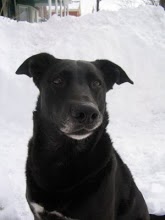
for 'groundhogs in the city', see comment.

http://science.jrank.org/pages/3149/Groundhog.html

Wednesday, May 20, 2009

Breaking The Sword


"And perhaps the great day will come when a people, distinguished by wars and victories and by the highest development of a military order and intelligence, and accustomed to make the heaviest sacrifices in these things, will exclaim of its own free will, "We break the sword", and will smash its entire military establishment down to its lowest foundations. Rendering oneself unarmed when one had been the best-armed, out of intense emotion- that is the real means to peace, which must always rest on peace of mind, whereas so-called armed peace, as it now exists in all countries, is the absence of peace of mind. One trusts neither oneself nor one's neighbor and, half from hatred, half from fear, does not lay down arms. Rather perish than hate and fear, and twice rather perish than make oneself hated and feared- this must someday become the highest maxim for every single commonwealth too."

-Friedrick Nietzsche-

Tuesday, May 19, 2009

Becoming Subjective by Johannes Climacus


So, there I sat and smoked my cigar until I drifted into thought. Among other thoughts, I recall these. You are getting on in years, I said to myself, and are becoming an old man without being anything and without actually undertaking anything. On the other hand, wherever you look in literature and life, you see the names and figures of celebrities, the prized and highly acclaimed people, prominent and much discussed, the many benefactors of the age who know how to benefit humankind by making life easier and easier, some by railroads, others by omnibuses and steamships, others by telegraph, others by easily understood surveys and brief publications about everything worth knowing, and finally the true benefactors of the age who by virtue of thought systematically make spiritual existence easier and easier and yet more and more meaningful- and what are you doing?

At this point my introspection was interrupted because my cigar was finished and a new one had to be lit. So I smoked again, and suddenly this thought crossed my mind: You must do something, but since with your limited capabilities it will be impossible to make anything easier than it has become, you must, with the same humanitarian enthusiasm as the others have, take it upon yourself to make something more difficult.

This idea pleased me enormously; it also flattered me that for this effort I would be loved and respected, as much as anybody else, by the entire community. In other words, when all join together to make everything easier in every way, there remains only one possible danger, namely, the danger that the easiness would become so great that it would become all too easy. So only one lack remains, even though not yet felt, the lack of difficulty.

Out of love of humankind, out of despair over my awkward predicament of having achieved nothing and of being unable to make anything easier than it had already been made, out of genuine interest in those who make everything easy, I comprehended that it was my task: to make difficulties everywhere.

It was also especially striking to me that I might actually have my indolence to thank that this task became mine. Far from having found it, like an Aladdin, by a stroke of good luck, I must instead assume that my indolence, by preventing me from opportunely proceeding to make things easy, has forced me into doing the only thing that remained.

Concluding Unscientific Postscript to Philosophical Fragments by Soren Kierkegaard

Sunday, May 17, 2009

Tiananmen Square by Minqi Li


'I was a student at the economic Management Department of Beijing University during the period 1987-90. This department has now become the Guanghua Economics Management School, a leading Chinese neoliberal think tank advocating full-scale market liberalization and privatization. At Beijing University, we were taught standard neoclassical microeconomics and macroeconomics, and what I later learned was termed "Chicago School" economics- that is, the theory that only a free market economy with clarified private property rights and "small government" can solve all economic and social problems rationally and efficiently.

We were convinced that the socialist economy was unjust, oppressive, and inefficient. It rewarded a layer of privileged, lazy workers in the state sector and "punished" (or at least undercompensated) capable and smart people such as entrepreneurs and intellectuals, who considered to be the cream of society...I thus, for China to have any chance to catch up to the West, to be "rich and powerful", it had to follow the free market capitalist model.

The 1980s was a decade of political and intellectual excitement in China. Despite some half-hearted official restrictions, large sections of the Chinese intelligensia were politically active and were able to push for successive waves of the so-called "emancipation of ideas" (jiefang sixiang). The intellectual critique of already existing Chinese socialism at first took place largely within a Marxist discourse. Dissident intellectuals called for democracy without questioning the legitimacy of the Chinese Revolution or the economic institutions of socialism.

After 1985, however, economic reformed moved increasingly in the direction of the free market. Corruption increased and many among the bureaucratic elites became the earliest big capitalists. Meanwhile, among the intellectuals, there was a sharp turn to the right. The earlier, Maoist phase of Chinese socialism was increasingly seen as a period of political oppression and economic failure. Chinese socialism was supposed to have "failed", as it lost the economic growth race to places like Japan, South Korea, Taiwan and Hong Kong. Many regarded Mao Zedong himself as an ignorant, backward Chinese peasant who turned into a cruel, power-hungry despot who had been responsible for killing tens of millions. The politically active intellectuals no longer borrowed discourse from Marxism. Instead, western classical liberalism and neoliberal economics, as represented by Friedrich Hayek and Milton Friedman, had become the new, fashionable ideology.

Liberal intellectuals disagreed among themselves regarding the political strategy of "reform" (that is, the transition to capitalism). Some continued to favor a call for "democracy". Others had moved further to the Right by advocating neo-authoritarianism, the kind of capitalism that existed in South Korea, Taiwan and Singapore, which denied the working class democratic rights but provided protection of the property right ( or "liberty"). Many saw Zhao Ziyang, the general secretary of the Chinese Communist Party, as the the one who could carry such an "enlightened despotism." Such were the ideological conditions in China before the emergence of the 1989 "democratic movement"....

As the student demonstrations grew, workers in Beijing began to pour into the streets in support of the students, who were, of course, delighted. However, being an economics student, I could not help experiencing a deep sense of irony. On the one hand, these workers were people that we considered to be passive, obedient, ignorant, lazy, and stupid. Yet now they were coming out to support us. On the other hand, just a few weeks before, we were enthusiastically advocating "reform" programs that would shut down all state factories and leave the workers unemployed. I asked myself: do these workers really know who they are supporting?

Unfortunately, the workers did not really know... After the "failure" of the Maoist Revolution, the Chinese working class was politically disarmed. The official television programs, newspapers and magazines now positively portrayed a materially prosperous western capitalism and highly dynamic East Asian capitalist "dragons". Only China and other socialist state appeared to have lagged behind. Given the collaboration of the official media and the liberal intellectuals (as certainly aided by mainstream western academia and media), it should not be surprising that many among the Chinese workers would accept the mainstream perception of capitalism naively and uncritically. The dominant image of capitalism had turned from one of sweat-shop super-exploitation into one synonymous of democracy, high wages and welfare benefits, as well as union protection of workers' rights. It was not until the 1990's that the Chinese working class would again learn from their own experience what capitalism was to mean in real life.

Saturday, May 16, 2009

Shakespeare's Sonnet No. 60


Like as the waves make toward the pebbled shore,
So do our minutes hasten to their end;
Each changing place with that which goes before,
In sequent toil all forwards do contend.
Nativity, once in the main of light,
Crawls to maturity, wherewith being crowned,
Crooked eclipses against his glory fight,
And time that gave doth now his gift confound.
Time doth transfix the flourish set on youth
And delves the parallels in beauty's brow,
Feeds on the rarities of nature's truth,
And nothing stands but for his scythe to mow:
And yet to times in hope my verse shall stand,
Praising thy worth, despite his cruel hand.

Wednesday, May 13, 2009

The Wittgensteins at War by Alexander Waugh


Paul turned the matter over in his mind. He knew that if he returned to Austria, where he was forbidden from performing or teaching and where the guardianship of his children had been taken away from him, he would be arrested and imprisoned. There was no point in trying to reclaim the property and fortune he had left behind. Instead he must concentrate on that part which was held outside the Reich, in Switzerland. But, as he well knew, his share of the Wistag Fund could not be disbursed without the consent of all the trust's beneficiaries and directors. These included his sisters, his brother in England, various nephews and nieces (most importantly Ji Stonborough in the U.S.), his brother-in-law Max Salzer and the family's financial factotum Anton Groller. A further and graver problem was that officials in Berlin knew about the fund and were demanding it be paid into the Reichsbank.

It would take time to secure the agreement of all parties and Paul, meanwhile, needed to find some way of paying his hotel bills and providing for his mistress Hilde and the children in Italy.

With the connivance of Dr. Heinz Fischer, a Swiss concert promoter, a German string quartet was invited to play in Zurich, bringing Paul's precious instruments from Vienna- two violins, one by Stradivari, one by Guadagnini, a viola by Amati and a Rugieri cello. Nobody would notice, as they crossed the border at Haslach, that the instruments in their cases were not theirs. Nor would they spot when the musicians returned to the Reich with cheaper models under their arms than those with which they had left. Dr. Fischer's and the musician's payment for this risky undertaking is not known, nor is the fate of the two violins (perhaps the instruments were themselves the smuggler's reward) but in October 1938 Paul took the viola and cello to the Swiss violin-maker Stubinger, who valued them at 18,000 Swiss francs each. A quick sale brought him temporary financial relief.

With or without the money, he had no intention of staying long in Switzerland and it is unlikely that the Swiss authorities would have continued renewing his visas indefinitely. In Zurich, as elsewhere in the country, the people were edgy and xenophobic. Fear of German invasion and resentment against the growing influx of refugees from the Reich had inspired the authorities to tighten border security and to insist, by October 1938, that all Jews' passports be stamped with a red letter "J". Within a year SS soldiers, acting on orders to rid the Vaterland of all lingering Jews, were physically pushing them over the borders. Swiss officials, on the other side, would irritably push them back again.

For Paul, who believed he looked more Jewish than any of his siblings, the growing anti-Semitism in Switzerland proscribed the country as a safe haven and by early August he had set his sights on America. Getting there, he knew, would not be easy. Like every foreign administration (with the exception of Santa Domingo) the American government refused to increase its quota of immigrants from Germany despite the international crisis. Paul had to pull strings and admitted in a letter to Marga Deneke when his travel plans were finally confirmed: "Although I have obtained the ticket for the ship to New York, I wouldn't have got it without special patronage".

see: http://en.wikipedia.org/wiki/Paul_Wittgenstein.

Tuesday, May 12, 2009

The Somme by Peter Hart


The Darkest Hour on The Western Front
October, 1916


'The infantry were to 'go over' at 3:40 a.m. It was a night of horror. The German's knew something was in the wind and shortly after midnight they opened up their artillery on the British batteries who were harassing them. Their fire, their counter-battery work, was better organized than ours. They would put four or five batteries- two 5.9-in, two 4.2 and a 77-mm all on the same target. High explosive, shrapnel and gas, all at once for ten minutes. Then they would move to a different target. Twice they came on to us that night. A gun was blown up, a small heap of ammunition went up, an NCO killed and several men wounded. We were lucky to get off so lightly.

With our three remaining guns we turned on the intensive stuff at 3:30 a.m. and from then on we lived in one screaming holocaust of light and sound. Sound! Deafening, screaming, shrieking sound, the whole range of the eardrum, like 50,000 express trains tearing through the air- colliding and tearing on again. Orders could only be passed by signals, no one could hear a verbal order however loudly shouted.

It was like daylight. The flickers and flashes as the shells left the guns, not only our guns, but every gun for miles, the yellow flash of bursting shells, the white glare of Very lights and star shells lit up the landscape as in one continuos lightening storm. Indeed man's efforts outdid the worst electric storm I have ever seen both in light and sound- rendering it a puny imitation- yet it is the only thing I know which gives any idea of the sensations of that night.

After only a few days the men's morale was rotting away in the mud, blood and gathering exhaustion. Our senses were become numbed. We only left our guns to go forward to our observation posts. We were never dry or clean, our food was always cold, gritty, out of tins, bread generally wet, nothing ever appetizing, the noise of gunfire continuous so that the nerves were constantly stretched, listening and assaying continuously or subconsciously the depth and nearness of shell bursts.

The Battle of the Somme seemed as if it might go on forever! Shells could not go on missing one forever- the time must come when one would be standing on an unlucky spot at the wrong time- and then? The ever-present unforgettable knowledge that, if not today, then tomorrow, if not tomorrow, then some day later, but in any case eventually, your turn would come. That conviction would grow as the stalemate continued, week after week, month after month, world without end, Amen. This is what caused all your pals to get thin in the face, haggard and jumpy. They knew it too; that some day some beer-swilling Kraut would load a shell into a Krupp gun, and an invisible hand would write in invisible ink your name on that shell before the trigger was pulled. And what would it do to you? A clean 'blot out' or blinding insanity, incurable crippling- searing white-hot pain?"

Lieutenant Kenneth Mealing, A Battery, 308th Brigade, Royal Field Artillery, 61st Division.