Monday, May 11, 2009

Blood River


The ground was brown with mud and rotting vegetation. No direct sunlight reached this far down and there was a musty smell of damp and decomposition. Above me towered canyons of green, as layer after layer of plant life filled the voids between the forest floor and treetop. I felt suffocated, but not so much from the heat as from the choking, smothering forest.


I took a few steps and felt my right boot clunk into something unnaturally hard and angular on the floor. I dug my heel into the leaf mulch and felt it again. Scraping down through the detritus, I slowly cleared away enough soil to get a good look. It was a cast-iron railway sleeper, perfectly preserved and still connected to a piece of track... It was a moment of horrible revelation. I felt like a Hollywood caveman approaching a spaceship, slowly working out that it proved life existed elsewhere in time and space...I had discovered evidence of a modern world that had tried- but failed- to establish itself in the Congo.

The Five Percenters


Islam, Hip Hop And The Gods of New York
By Michael Muhammad Knight


Though building on a unique cosmology and legendary characters, Allah positioned himself as anti-religion. Known as a High Scientist during his time in the mosque, he later discouraged high science in favor of "city science". Many Gods take a practical look at their divinity; the word God to both Fard and the Father, in I Majestic's interpretation, "has no religious context here, it's not claiming to be an astral being" The Five Percenters would respond to anarchism's ethos of "no gods, no masters", with I God, I Master. For a black man to call himself God means that he will take responsibility, as the Father of Civilization , to lift himself up in the here and now- as opposed to waiting for a mystery to solve his problems or reward him in the afterlife...

I thought of Allah and the Desert Fathers that came before him: Father Divine, Noble Drew Ali, the Honorable Elijah Muhammad. They were all born in the south and came north as young men in search of a better tomorrow, but found the American Dream to be a mystery god: an empty promise that took blind faith and gave only hard times.

There really is a devil, and like the Lost-Found Muslim Lesson No 1 says, he does keep you from his social equality. The bloodsucking Ten percenters, peddlers of the Mystery God, rule the Eighty-five Percent with priests, imams, ministers, mullahs and theologians, trained experts in phantoms, selling what cannot be seen. An old man who has only been an MTA bus driver all his life cannot stand up in a mosque and give khutbah on what he learned while struggling in the city and supporting a family. It's not enough, he has to go to Al-Azar, perfect his Arabiyya, master tajwid, eat up the medieval scholars, fill his head with fiqh and learn all the schools of thought. But in the new Mecca of Harlem, he can come to the front of the Harriet Tubman's auditorium in his MTA work jacket and he's God as is.'

My Faithful Dog Sharik by Fyodor Dostoyevsky


When the afternoon's work was over, and I returned to the prison in the evening, weary and exhausted, a terrible feeling of anguish once again overcame me. ' How many thousands of days like this one still lie ahead of me', I thought, 'all of them like this one, all of them the same'. When it was already getting dark, I was wandering silently and alone behind the barracks, following the line of the prison fence. Suddenly, I saw our dog Sharik running towards me.

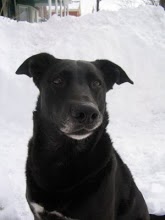
Sharik was our prison mascot, just as there are regimental mascots, battery and squadron mascots. The dog lived in the prison longer than anyone could remember, belonged to no one, considered everyone his owner and was fed on scraps from the kitchen. He was quite a large dog, black with white spots, a mongrel, not very old, with intelligent eyes and a fluffy tail. No one ever fondled him or paid him the slightest attention. From my first day, I stroked him and gave him bread out of my hand. When I stroked him he would stand quietly and look at me affectionately, gently wagging his tail as a sign of pleasure.

Now, not having seen me, the first person to fondle him in several years, for a long time, he had been running around looking for me among all the other convicts, and finding me behind the barracks came rushing towards me with a yelp of joy.

I don't know what came over me, but I rushed forwards and kissed him, throwing my arms around his head; in one running leap he placed his forepaws on my shoulders and began to lick my face. 'So this is the friend that has been sent to me by fate', I thought, and every time I returned from work during those early sombre days, the first thing I did, before going anywhere else, was to hurry behind the barracks with Sharik jumping up in front of me, yelping with delight, embrace his head and kiss it again and again, while a sweet yet agonizing bitter sensation gnawed at my heart. And I remember that I would derive great satisfaction from the thought- as though taking pride in my own agony of spirit- that there was in the whole world left to me only one creature that loved me, that was devoted to me, my friend, my only friend- my faithful dog Sharik.


-The House of the Dead- (1860)

Saturday, May 9, 2009

The Duel by Tariq Ali


'Politics in a land of perpetual dictatorships and corrupt politicians is undoubtedly depressing, but with some positive aspects. For one, politics has revived an interest in stories from the popular literature of an earlier period of Muslim rule in the region.

First told by a sixteenth-century storyteller, repeated to me in Lahore in 2007, the following tale sums up, with a few modifications, life in Pakistan today:

A man is seriously dissatisfied with a junior magistrate's decision. The latter, irritated, taunts him to appeal to the qadi (a senior judge).

"But he's your brother, he won't listen to me", the man replied.

Then go to the mufti [ expert in Muslim law]! said the judge.

"But he's your uncle"

-"Go the the minister"-

"He's your grandfather.

-"Go to the King!"-

"Your niece is engaged to him"

The magistrate, livid with anger, finally says: "Go to hell then".

To which the man replied:

"That is where your esteemed father reigns. He'll see I get no satisfaction there either!"'

Thursday, May 7, 2009

Snowball


Abby Mandel's Boule de Neige (Snowball)

(Should be made at least a day before serving, but the whipped cream on the day it is served)

Eight ounces of semisweet chocolate (if possible, use Maillard's Eagle Sweet of Baker's German Sweet)
2 teaspoons dry instant coffee
1/2 cup boiling water
1/2 pound (2 sticks) sweet butter, at room temperature
4 eggs (graded large)
1 Tablespoon Cognac or dark rum.

Adjust rack one-third up from the bottom of the oven and preheat to 350 degrees. You will need a round, ovenproof mixing bowl (for baking this dessert) with a 6- to-8 cup capacity, it may be glass, pottery or metal, and it should preferably be deep and narrow rather than wide and shallow.

To line the bowl with aluminum foil, turn the bowl upside down, tear off a 12-inch square of foil and center it over the inverted bowl and press with your hands down on all sides all around to form foil into a bowl shape. Then remove the foil, turn the bowl right side up and place the bowl-shaped foil into the bowl. Press firmly into place.

Break up the chocolate and place in a small saucepan. Dissolve the coffeee in the boiling water and add it along with the sugar. Stir over moderate heat until the chocolate is melted- the mixture does not have to be smooth.

Transfer to the large bowl of an electric mixer and beat on low speed until smooth. Gradually add the butter and continue to beat at low speed until smoothly blended. Add eggs one at a time until smooth after each addition. Add the Cognac or rum and beat at moderate speed for about a minute.

Pour the mixture into the lined bowl and bake for 55 minutes. When done the top will be puffy with a thick, cracked crust.

Let the bowl stand at room temperature until the dessert is cool- it will shrink as it cools and shrink more in the center than around the rim.

To avoid having a hollow in the middle follow these directions:

A few minutes after the dessert comes out of the oven, place a piece of waxed( or parchment) paper on top of the bowl, touching the dessert. With your finger tips, press down on the edges of the paper to flatten the raised rim of the dessert (the crust will crack- that's all right) Repeat several times while the dessert is cooling in order to flatten the top as much as possible.
When the dessert is cool, cover airtight and refrigerate.

A few hours before serving unmold the dessert. Invert a flat dessert plate over it, invert the plate a bowl, remove the bowl and peel off the aluminum foil, refrigerate.

WHIPPED CREAM:
1cup heavy cream
2 Tablespoons granulated sugar
2 teaspoons Cognac or dark rum

Careful not to make it too stiff or it might curdle while you press it out of the pastry bag.

You will need a pastry bag about 13 inches long and a medium-small star tube, or about a #4. Insert the tube into the bag, fold down a deep cuff on the outside of the bag, transfer the cream to the pastry bag, unfold the cuff and twist the top of the bag closed.

Now, completely cover the dessert with small pointed rosettes of whipped cream. Start at the center top and squeeze out one small rosette right in the middle. Then make a circle of rosettes touching one another around the one on top. Then another circle etc. the last circle should touch the plate.

This is from Maida Heatter's book of Great Chocolate Desserts.

Monday, May 4, 2009

Vanished Smile; The Mysterious Theft of Mona Lisa by R.A. Scotti


Paris; August, 1911

From the ateliers of Montmarte and the cafes of Montparnasse, a radical creative idiom was emerging that would change both art and writing. While Proust was wrestling The Remembrance of Things Past from a pile of notes and scribbles, the very sentiment of remembrance was coming under attack. The past was no longer a lesson to be mastered. It was an inhibition to be overcome...

Appollinaire and Picaso were in the vanguard of the impassioned battles being waged in Paris over the direction of the arts. They were friends and leaders of a group loosely known as la bande de Picasso. Familiar from Montmarte to Manhattan as "the Wild Men of Paris," Picasso's gang of painters and poets were the outlaws of traditional art, riding into town like the cowboys of the Wild West to slay the Renaissance gods.

Young, brilliant, and ruthlessly ambitious, they strutted through the cobblestone streets of Montmarte and filled the cheap cafes, defining themselves as well as the new idiom, breaking the rules to free art from art history. Much of their art and their antics were "shocks of discovery" committed to roil the status quo. More has been written about Bloomsbury, the London-based group of artists and writers, though it was less expansive and more inbred- a hothouse where la bande de Picasso was a wild garden. Passions were rude and rowdy. Ideas had the power to shock, and epiphanies came thick and fast.

Two agonizng weeks after the theft of Mona Lisa from the Louvre, Prefect Lepine ("le petit roi") believed he had cracked the case. In la bande de Picasso he had found the international ring of art thieves he had been hunting: Appollinaire and his nefarious colleagues "making this hullabaloo in the painting department."

To the police the case was persuasive. Seizing the Mona Lisa was an insolent act in what Appollonaire called "the endless quarrel between Order and Adventure." It was a declaration of independence. What more dramatic way to kill your father than to target the most famous painting by the most provacative Renaissance master?

The Picasso gang had been lionized as romantic renegades. When the police identified them as a ring of "foreign thieves and swindlers who had come to France to plunder its treasure," escapades once excused as careless exuberance assumed sinister overtones. Tales circulated of the Picasso gang's coming back from the cafes late a night, frequently drunk, shouting, singing and declaiming in the squares. Picasso always carried a Browning, and he would wake up the neighbors by shooting it into the charged air.

Stunned by the greatest art theft in history, Paris was shocked anew to learn that the prime suspects were the firebrands of the modern-art movement.

Friday, May 1, 2009

The Death of Captain Cook by Glyn Williams


The union of the colonies in the Commonwealth of Australia in 1901 was a key moment in the shaping of the new nation, and the celebrations included a reconstruction of Cook's landing at Botany Bay. There a few Aborigines were scattered by mock musket-fire, while the actor playing Dr Solander shouted after them:

As shadows flee before the dawn of day,
So the dark tribes of Earth in terror flee
Before the white man's ever onward tread;
And all the night of ignorance and sin
Both vanish as the light of Truth's fair day
Dawns in the East and spreads o'er all the Earth.

It was the only reference to the original Aboriginal inhabitants of Botany Bay in twelve pages of poetic declamation.

The twentieth century saw the development of a cult in which Cook, the self-made man of humble beginnings, represented the pioneering virtues of the new nation. The cult began in the classroom, where school texts began their history of Australia with Cook's voyages. By the end there were Cook monuments, Cook playing fields, Cook fountains, Cook hotels and restaurants, Cook stamps, a James Cook University and even a small house built by Cook's father after his son left home which was shipped at great expense from Yorkshire to Australia.

There was something odd about this devotion to a British hero at a time when Australia was moving away in terms of material and sentimental ties from Britain. One of Gail Morgan's characters in her novel Patent Lies explains that, as far as Australia was concerned, 'historically Cook did little more than draw a decent map, but history does not always matter.' He was their Columbus; the fact that the Dutch had charted two-thirds of the Australian coastline more than a century earlier seemed not to count. Hence the excitement when every few years a book appears that challenges Cook's assumed priority with an earlier 'discoverer' from among the ever-growing group of Portuguese, Spanish, French and Chinese navigators. The Australian newspaper headlines that greeted the most recent of these books, Peter Trickett's Beyond Capricorn (2007) are self revelatory: 'another nail in Cook's coffin'; 'New doubts that Cook discovered Australia'; 'Captain Cook scuppered by book'.